Google no longer relies on simple keyword matching to decide which local businesses appear in search results. You will learn the specific ways Google parses your digital footprint to categorize your services and determine if you are a trustworthy match for a customer's search.
On This Page
The three pillars of local ranking
Google views your local business through the lens of relevance, distance, and prominence. Relevance measures how well your Google Business Profile and website content match what the user is typing into the search bar. If a homeowner in Phoenix searches for a '24-hour emergency plumber,' Google evaluates your profile to see if you explicitly list emergency services as a category or service attribute.
Distance is the most rigid factor because Google cannot change where the user is currently standing. If you are an HVAC contractor three miles away but another competitor is only one block away, that competitor has a built-in advantage. However, you can offset a distance gap by having superior relevance and prominence. This is why some businesses appear in the local pack even when they are not the closest option to the searcher.
Prominence is essentially your business's popularity rating in the digital world. Google looks at your review count, your star rating, and how many other reputable websites link back to your domain. A dentist with 47 five-star reviews and mentions in the local newspaper will almost always outrank a newer clinic with zero reviews, even if the new clinic is geographically closer to the patient.
When these three factors align, your business starts appearing in the Map Pack more frequently. This increased visibility leads directly to more phone calls because users can tap your phone number without ever leaving the search results page. Understanding this framework allows you to stop guessing and start focusing on the specific data points Google actually uses to rank your shop. Want the full picture? Read our Ultimate Guide to Local SEO.
Category selection and service attributes
Your primary category is the strongest signal you can send to Google. If you run a landscaping company but set your primary category as 'General Contractor,' you are confusing the algorithm and losing out on high-intent leads. Google uses these categories to group you with similar businesses, so choosing a broader secondary category like 'Lawn Care Service' or 'Tree Surgeon' helps refine that understanding.
Beyond categories, service attributes provide the granular detail Google needs to answer specific queries. If a customer searches for 'commercial roofing near me,' Google scans your service list for that exact phrase. If you have only listed 'Roofing,' you may lose the lead to a competitor who explicitly checked the 'Commercial' attribute box in their Google Business Profile dashboard.
Don't ignore the 'Amenities' and 'Highlights' sections either. Attributes like 'Women-led' or 'Wheelchair accessible' aren't just for social proof; they are searchable data points. If a user filters their search for specific business traits, having these attributes completed ensures you remain in the running while your competitors are filtered out for missing data.
Specific service descriptions also help Google's AI understand the context of your work. Instead of just listing 'Legal Services,' a family law attorney should list 'Contested Divorce Mediation' and 'Child Support Litigation.' This level of detail tells Google exactly which types of phone calls you are qualified to handle, reducing junk leads and increasing your conversion rate. Related reading: Understanding Relevance.
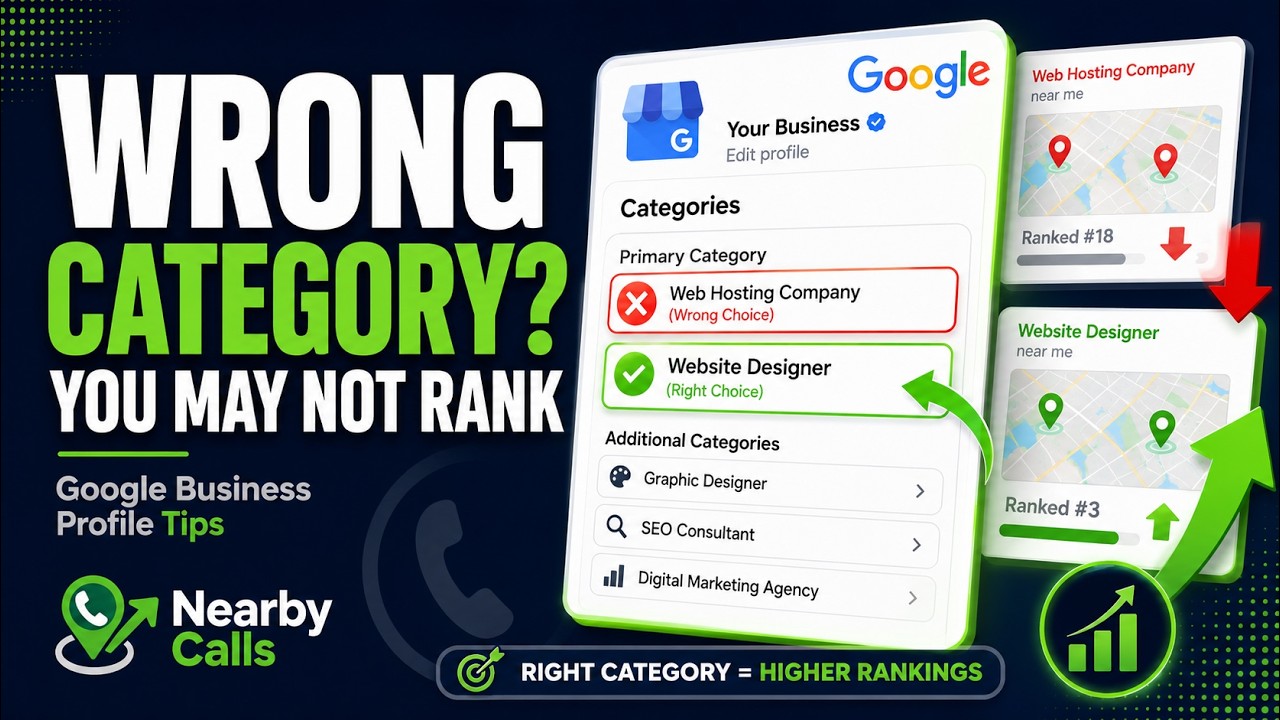
Fix Your Google Business Profile Categories to Rank Higher on Google Maps
Watch on YouTube
Semantic matching and website content
Google's algorithm has evolved from reading words to understanding entities. It knows that a 'dentist' is related to 'teeth whitening,' 'root canals,' and 'dental implants.' If your website mentions these related terms naturally, Google gains more confidence that you are a legitimate dental practice rather than just a page stuffed with the word 'dentist.'
Your location pages must bridge the gap between your physical shop and the surrounding neighborhood. A plumber in Phoenix should mention specific suburbs like Scottsdale, Mesa, or Tempe and talk about common local issues like hard water damage or pipe corrosion from desert heat. This local context tells Google that you aren't just a national lead-gen site, but a real local expert.
The connection between your Google Business Profile and your website is vital. Google scans your site to verify the information on your profile. If your profile says you close at 5:00 PM but your website says 6:00 PM, the algorithm sees a conflict. Inconsistency creates distrust, which can lead to lower rankings and fewer calls as Google avoids recommending businesses with unreliable data.
Structured data, or Schema markup, acts as a translator for Google. By adding LocalBusiness Schema to your website code, you tell the search engine exactly which phone number belongs to you, where your office is located, and even what your average review rating is. This technical shortcut makes it easier for the algorithm to index your business accurately without having to guess based on your design. Related reading: Why NAP Consistency Matters.
Review sentiment and keyword extraction
Google doesn't just count your reviews; it reads them. It uses natural language processing to extract keywords from what your customers write. If multiple customers mention that you are the 'best divorce lawyer in Chicago,' Google associates your practice with that specific phrase. This influence is why businesses with descriptive reviews often outrank those with five-star ratings but no text.
The way you respond to reviews also signals your activity level to Google. A business that responds to every review within 24 hours shows the algorithm that the profile is actively managed. Use these responses to naturally reinforce your services. For example, if a customer praises your 'quick furnace repair,' your response could thank them for trusting you with their 'HVAC maintenance' needs.
Negative reviews are not a death sentence, but they do tell Google about your weaknesses. If many reviews mention 'long wait times' or 'unprofessional staff,' Google may demote you for searches that include the word 'best' or 'top-rated.' Consistently providing good service is the only long-term way to keep the algorithm's favor and keep the phone ringing.
Avoid the temptation to buy fake reviews or incentivize customers with discounts. Google is exceptionally good at spotting unnatural review patterns, such as a sudden surge of 50 reviews in one day for a business that usually gets one per month. If you get caught, Google may suspend your profile entirely, which is the fastest way to kill your local lead flow. Related reading: Why Location Pages Matter.
NAP consistency across the web
NAP stands for Name, Address, and Phone number. Google crawls thousands of third-party sites like Yelp, Yellow Pages, and local Chamber of Commerce directories to see if your information matches. If one site has your old suite number and another has your new one, Google becomes less certain about your actual location, which hurts your ranking in Google Maps.
Consistency extends to how you format your business name. If your legal name is 'Smith & Sons Plumbing,' don't list yourself as 'Smith Plumbing' on one site and 'Smith & Sons Plumbing Service' on another. Pick one version and stick to it everywhere. This helps Google's algorithm 'bond' all these different mentions into a single, powerful authority signal for your business.
Your phone number is a primary identifier for tracking your business identity. While using tracking numbers for marketing is common, you must ensure your Google Business Profile and website use your primary local line. Google prefers local area codes over toll-free numbers because they reinforce your physical presence in the specific community you are trying to serve.
Frequent audits of your citations are necessary because information can change without your input. Data aggregators sometimes pull old information from public records, creating duplicate listings or incorrect data. Cleaning these up ensures that when a customer finds you on any platform, they are seeing the same 100% accurate data that leads them straight to your call button.
Real-world signals and user behavior
Google tracks how users interact with your business in the real world to gauge your popularity. This includes 'pogo-sticking,' where a user clicks your profile and then immediately goes back to another result. If people consistently click your 'Call' button or 'Request a Quote' button, Google sees that you are meeting user needs and will likely boost your visibility.
The move-to-location data from mobile phones is another silent signal. Google can see how many people actually drive to your storefront or office after searching for you. A high volume of physical foot traffic suggests your business is a pillar of the community, which boosts your prominence and helps you outrank competitors who may have better websites but fewer real customers.
Photos are a frequently overlooked behavior signal. Businesses that regularly upload fresh, high-quality photos of their work, their team, and their location see higher engagement rates. Google's vision AI scans these images to confirm what you do. It can identify tools, vehicles, and office settings, further confirming that you are indeed a plumber or an accountant in that specific city.
Finally, the 'Search Volume' for your specific brand name tells Google how much people care about you. If hundreds of people search for 'Joe's Pizza Dayton' specifically, rather than just 'pizza near me,' Google considers you a high-authority entity. This brand recognition makes it easier for you to capture the top spot for general searches because you've already proven your value to the local market. If you would rather have this handled for you, Nearby Calls keeps local profiles active, reviewed, and ranking — so the calls come in.
Frequently Asked Questions
Get found, trusted, and called on Google.
Nearby Calls helps local businesses stay active on Google, collect more reviews, and generate more customer calls.
Learn About Nearby Calls