
Why Incomplete Profiles Lose Customers
When a person searches for a local service and finds your Google Business Profile, they are looking for a reason to choose you or a reason to move on to the next result. An empty or outdated profile project's a lack of professionalism that turns away potential leads before you even know they exist. You will learn how to turn your profile into a conversion machine by fixing the specific gaps that currently cost you phone calls.
On This Page
- The psychological impact of empty profile fields
- Missing business hours and immediate abandonment
- The trust gap caused by a lack of visual proof
- How service descriptions drive specific phone leads
- Negative signals from unanswered questions and reviews
- Strategic use of attributes for competitive advantage
- FAQs
The psychological impact of empty profile fields
Empty fields on your profile act as red flags for modern consumers who rely on instant information to make decisions. If a homeowner in Dallas needs an emergency electrician and finds a profile with no business hours or website link, they assume the business is either closed or unreliable. You lose the lead not because your service is bad, but because your digital presence didn't provide enough information to facilitate a phone call.
A complete profile creates a sense of stability and permanence. When you leave the 'Services' section blank or fail to upload recent photos of your work, you force the customer to do extra research. Most people won't work that hard; they will simply click the next listing in the Map Pack that clearly displays what they do and when they are open. Profiles with missing data signals to Google and the customer that you are a hobbyist rather than a dedicated professional.
Consider a dentist in Chicago who has 50 great reviews but no interior photos or detailed service list. A patient with dental anxiety might skip this office because they cannot see the environment or confirm if specific sedation options are available. By completing every section, you remove the friction that prevents a user from hitting the 'Call' button.
The lack of data also impacts your visibility. Google's algorithm prioritizes profiles that it understands deeply. If you haven't filled out your business description or attributes, Google has fewer data points to match your business with specific long-tail searches. This means you aren't just losing the customers who find you; you are losing the chance to be found at all. Want the full picture? Read our the full guide.
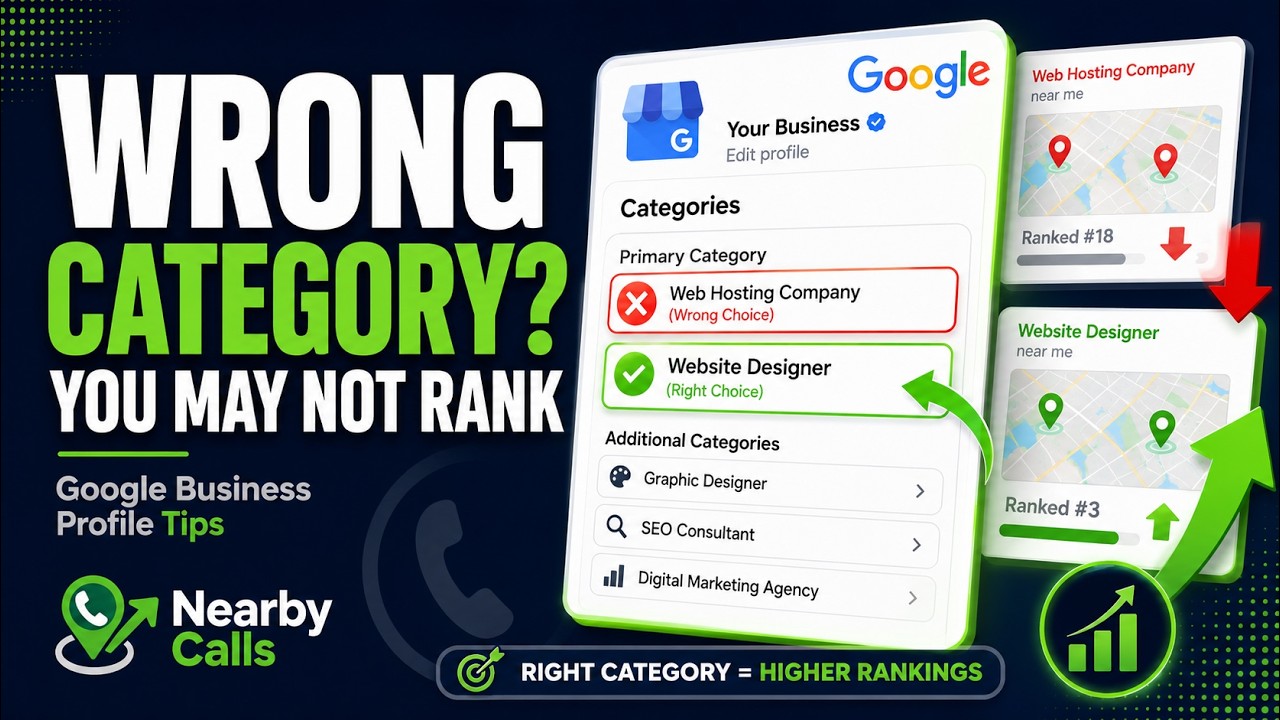
Fix Your Google Business Profile Categories to Rank Higher on Google Maps
Watch on YouTube
Missing business hours and immediate abandonment
Inaccurate or missing business hours are the fastest way to kill a local lead. When a user sees 'Hours might differ' or finds no hours listed, they rarely take the risk of calling or driving to your location. They want the certainty that someone will answer the phone right now. For service businesses like plumbers or HVAC technicians, this clarity is the difference between a high-volume day and a silent phone.
Take a local coffee shop that hasn't updated its holiday hours. A customer who drives there only to find it closed won't just leave disappointed; they will likely leave a one-star review citing the inaccuracy. This damaged reputation lingers long after the holiday is over. You must treat your Google Business Profile as a live office manager that provides real-time updates to your local community.
Incomplete hours also affect the 'Open Now' filter in Google Maps. If a user toggles this filter and your hours aren't set, your business completely disappears from the search results, even if you are standing in your shop ready to work. You are essentially making your business invisible to the most motivated buyers in your area.
To maximize call volume, ensure your regular hours and 'More hours' for specific services are fully documented. If you offer 24-hour emergency service, make sure that is the primary setting. This small technical detail ensures you remain a viable option during late-night searches when competition is often lower but the need is urgent. Related reading: How to Fully Optimize Your Google Business Profile.
The trust gap caused by a lack of visual proof
Photos are the most visited part of a Google Business Profile, yet many owners leave them to chance. An incomplete photo gallery—or worse, a gallery filled only with low-quality customer snapshots—fails to build the trust necessary for a high-ticket sale. A roofing contractor in Miami who only shows a logo and a street view of their office will lose to a competitor who uploads high-resolution photos of completed projects and smiling crew members.
Visual proof answers the customer's unasked questions: Do they have the right equipment? Do they look professional? Are they active in the community? Without your own uploaded photos, Google will often default to an unappealing Street View image of the curb or a nearby parking lot. This is a poor first impression that suggests your business is stagnant or non-existent.
You should aim for a mix of 'work-in-progress' shots and finished results. For a landscaping company, this means showing the messy backyard transformed into an outdoor kitchen. This narrative arc proves competence. When people see you doing the work they need, their confidence increases, and they are significantly more likely to click the call icon directly from the image viewer.
Don't overlook the importance of team photos. People buy from people, especially when inviting a service provider into their home. Profiles that feature the owner's face or the service team in uniform see higher engagement rates. This human element bridges the gap between a digital listing and a real-world business relationship. Related reading: Why Customers Contact Some Businesses First.
How service descriptions drive specific phone leads
The 'Services' and 'Products' sections are often neglected because they require manual entry, but they are vital for local lead generation. If a garage door repair company doesn't list 'spring replacement' or 'opener installation' in their services, they may not show up when a homeowner searches for those specific terms. General listings get general traffic; detailed listings get high-intent calls.
Each service you add acts as a keyword that tells Google exactly what you do. You should write a brief, 2-3 sentence description for every service you offer. Mention the brands you use and the specific problems you solve. For example, a lawyer shouldn't just list 'Family Law'; they should list 'Contested Divorce Mediation' and 'Child Custody Disputes'.
When these fields are blank, you give the customer a reason to call your competitor to 'make sure' they can do the job. If your competitor has explicitly listed the service and you haven't, the customer will choose the sure thing every time. They don't want to waste time on a phone call only to find out you don't handle their specific issue.
Detailed service listings also help Google’s 'justifications' feature. You might see a result that says 'Their website mentions...' or 'They provide...'. These snippets are often pulled from the data you provide in your profile. These justifications serve as a powerful endorsement that convinces the user you are the right person for the job before they even finish reading your name. Related reading: The First Things Customers Notice on a Google Profile.
Negative signals from unanswered questions and reviews
Responding to reviews is another critical component of a 'complete' presence. A profile with 100 reviews but zero owner responses looks like a business that doesn't care about customer feedback. This is particularly true for negative reviews. A thoughtful, professional response to a complaint can actually win you more customers than a perfect five-star rating with no engagement.
Incomplete engagement also hurts your ranking. Google rewards active businesses. Regularly updating your profile with responses and new posts tells the algorithm that the information is fresh and the business is operational. This activity pushes you higher in the local rankings, leading to more impressions and, ultimately, more phone calls.
Strategic use of attributes for competitive advantage
Attributes are the small icons and tags that highlight specific features, such as 'Women-led', 'Veteran-owned', or 'Wheelchair accessible'. Leaving these blank is a missed opportunity to connect with specific demographics who prioritize these values. For many customers, these attributes are the final 'tie-breaker' when choosing between two businesses with similar ratings.
Service-based attributes, such as 'Onsite services' or 'Online appointments', are equally important. During the initial search, users can filter for these specific traits. If you offer free estimates but haven't checked that box in your attributes, you are excluded from searches specifically looking for 'free estimate' providers. This is a massive leak in your lead generation funnel.
For a local restaurant, attributes like 'Outdoor seating' or 'Good for kids' are essential decision-making factors. If a parent is looking for a place to eat and your profile doesn't confirm it is kid-friendly, they will find one that does. Data completeness is about providing every possible piece of information that could influence a 'yes'.
Make it a habit to check your attributes every quarter. Google frequently adds new options based on seasonal trends or social shifts. By staying current with these tags, you ensure your profile remains optimized for the ways people are currently searching. A fully optimized attribute list makes your business appear more modern and accommodating than the competition. If you would rather have this handled for you, Nearby Calls keeps local profiles active, reviewed, and ranking — so the calls come in.
Frequently Asked Questions
Get found, trusted, and called on Google.
Nearby Calls helps local businesses stay active on Google, collect more reviews, and generate more customer calls.
Learn About Nearby Calls